Custom build or off-the-shelf?
The right answer depends on what you actually do with the machine, not on which one sounds more impressive.
September 2, 2026 · 3 min read
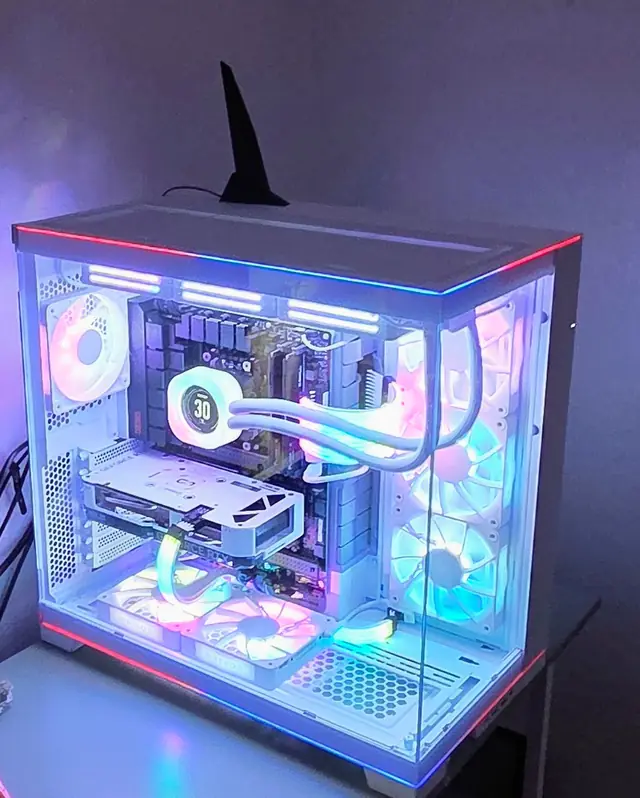
Custom build or off-the-shelf isn't a question with one right answer, and anyone who tells you it is happens to be selling one side of it. Some people are genuinely better served walking out the door with a boxed machine the same day. Others are better served by something built around exactly what they do with a computer, with parts chosen instead of bundled. JCO Computers builds both kinds of answers, hand-built machines in their Avondale shop and straightforward guidance on when a prebuilt is simply the smarter call, and it's worth knowing the difference before you spend the money either way.
When a prebuilt is genuinely the right call
If your computer's job is browsing, email, streaming, general office work and not much beyond that, a well-chosen prebuilt machine will do everything you need without a second thought. The components in a mainstream prebuilt are matched to each other and tested as a unit before it ever leaves the factory, the price is usually lower for the same basic specification, and you can walk out with it the same day rather than waiting on parts. For light, general use, that's simply the more sensible purchase, and there's no reason to pay for headroom you're never going to touch.
Where a hand-built machine wins
The calculation changes once the workload gets specific. Gaming, video editing and graphic design all put real, sustained pressure on particular parts of a machine rather than a bit of pressure on all of them evenly, and a custom build lets every component get chosen for that actual job instead of a generic spec sheet. It also changes what happens two or three years down the line. A hand-built machine is easier to open up and add to, whether that's more memory, a bigger drive, or a stronger graphics card, rather than replacing the whole unit because nothing inside it was ever meant to be swapped out. Part quality is part of this too. A custom build lets you choose a reliable power supply and case fans instead of accepting whatever a manufacturer bundled in to hit a price point, which matters more than it looks over years of daily use.
What that looks like when something breaks
One customer's son had a custom build he thought he'd ruined while working on it himself. JCO replaced the PC cooler, rebuilt the machine, and got it looking and running like new, to the point that he was genuinely thrilled with the result. That's the practical upside of repairability built into a custom machine from day one. It's a known set of parts that a technician can open, diagnose and put right piece by piece, rather than a sealed unit where a single failed part can mean starting over. It's a small story, but it's exactly the kind of fix a hand-built machine makes possible that a disposable prebuilt often doesn't.
How JCO builds each machine
Every custom build at JCO Computers is put together in the Avondale shop, with over a decade of experience behind it. Inventory allocation, assembly, testing and quality assurance are all conducted in-house rather than handed off to a third party, whether the machine is a gaming tower, a workstation for video editing or graphic design, or a straightforward desktop or laptop for everyday use. The same team that builds it is the one you call if something ever needs attention later, which is its own kind of reassurance.
If you're weighing a custom build against something off the shelf, it's worth a conversation before you decide either way. Call JCO Computers at (480) 626-8585 or see more on the /services/custom-pcs page, and a technician will give you a straight answer about which one actually fits what you do with it.
JCO Computers, (480) 626-8585
Call (480) 626-8585More articles
Your laptop won't turn on. Here's what actually happens next.
A dead laptop and a dead hard drive are two different things, and the difference decides whether your files come back.
What a fixed-price IT plan actually covers
Managed IT means paying to keep things from breaking instead of paying after they already have.